





So do you want to start your own thing, but you keep running into money constraints, and it kind of feels like you’re stuck? Starting a business with no cash is not easy at all, yet it is actually doable if you have the right mindset, plus a smart kind of plan. The real trick is to trade capital for effort, like lean into what you can do already, use your abilities to solve a true problem for folks nearby, and pick a business model with almost no overhead.
Can You Really Start a Business With No Money?
Yes—with an important caveat. You don’t need a large sum of money to start a business, but you do need to invest something. This can include your time, existing skills, and willingness to learn. Low-cost ideas reward imagination and analytical thinking more than capital, and they make you get creative. What you’re really doing is trading startup money for startup effort, and then you reinvest your first earnings to grow from there.

Step 1: Create a Business Concept
Investigate Your Interests and Passions
- Take a little time to think over what your passions are, the hobbies too, and those interests that stick with you. Then look at what you do day to day that feels genuinely joyful and has a sense of purpose.
- Identify your true skills and areas of excellence, then explore how to leverage that expertise into a profitable venture.
- Stay informed about current trends and breakthroughs across multiple fields, and look for ways to combine your interests with what’s happening right now in a clever, sideways way.
Identify Problems in Your Community
The strongest business ideas emerge at the intersection of your skills and genuine problems that others face. To find that overlap, you need to look closer:
- You should take part in a needs assessment for your community, like actually going to local events and meetings or dropping into online forums to gather information. Don’t just rely on one source; try to listen around, ask a few questions, and notice what people are saying, even if it’s scattered.
- Look for pain points or recurring issues, and then check again to see how often they occur. Thereafter, do the research to confirm how serious it is and whether it is widespread or not.
- Try doing a couple quick little surveys with potential clients, just to get a feel for where they’re at right now. Inquire about the specific issues they are facing, focusing on the precise problems rather than general “vibes” or vague concerns. Then focus on spotting the main pain points they bring up. Listen closely. The real problem lies in the details, not just in the general complaint.
- Reach out to subject matter experts and collaborate with specialists to gather valuable ideas and sharp suggestions. In other words, don’t just stay at a superficial level; it can be beneficial to engage with people who have a profound understanding of the topic.
- Consider whether weather technology can address the problem, using digital tools to boost productivity and comfort. It’s not just about efficiency; it’s also about that little convenience factor, and they’re all connected.
By mixing your creativity with problem-solving, you can create a business that fits what you like and meets a real need out there. When you really get why people have those little worries, it becomes easier to craft solutions that set your business apart and also help the people around you in a more straightforward way.
Step 2: Choose a Low-Cost Business Model
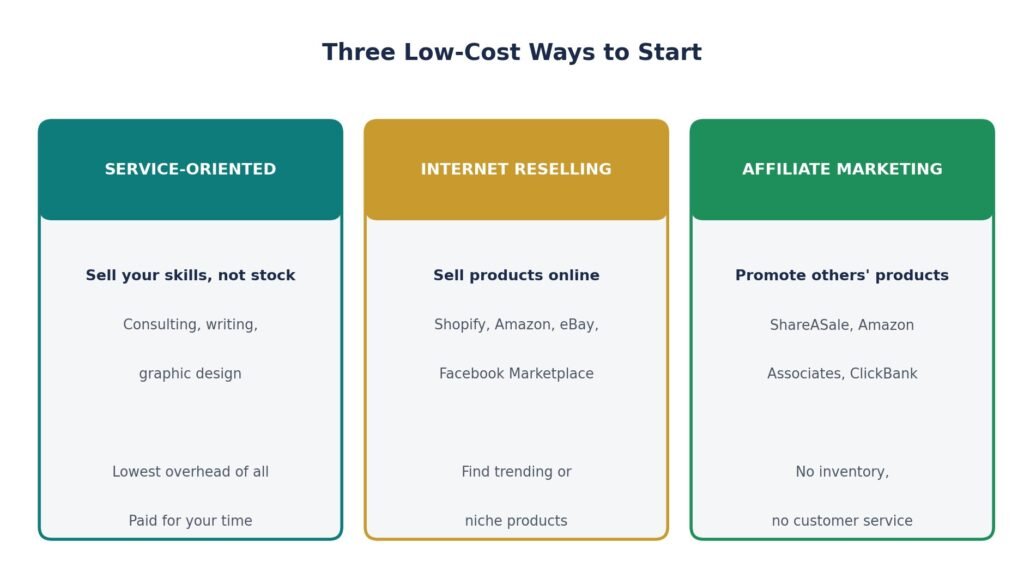
Three models consistently work well for people starting with little or no capital.
Service-Oriented Businesses
Explore the area of services and put your skills to work right away. Just offer consultancy in your specialty, do freelance writing, or sell your graphic design abilities—whatever fits. Since service-oriented businesses have such low overhead costs, they’re a wonderful place to begin; you get paid for your time and know-how, not for inventory you’d have to purchase first. It feels a bit smoother in that way, you know?
Internet Reselling
E-commerce platforms simplify product sales by requiring a relatively low initial investment, allowing you to avoid upfront costs. You can start an online store by figuring out either trending goods or more niche specialty products. Then you just list them on places like Shopify, Amazon, and eBay, and yeah, each of those gives you a low-cost entry point into online reselling. It sounds simple because it mostly is.
Affiliate Marketing
You can earn money by promoting products using your already existing online presence, and it works. Affiliate marketing is promoting products and earning a share of sales from customers who click your links. Depending on where you spend your time online, you can place these links on a blog, website, or even your social media account.
This model has very little overhead, because you don’t have inventory or customer service, not really. So, it is easier to find products to promote and then start earning through platforms like ShareASale, Amazon Associates, and ClickBank.
Home Business Ideas With No Money
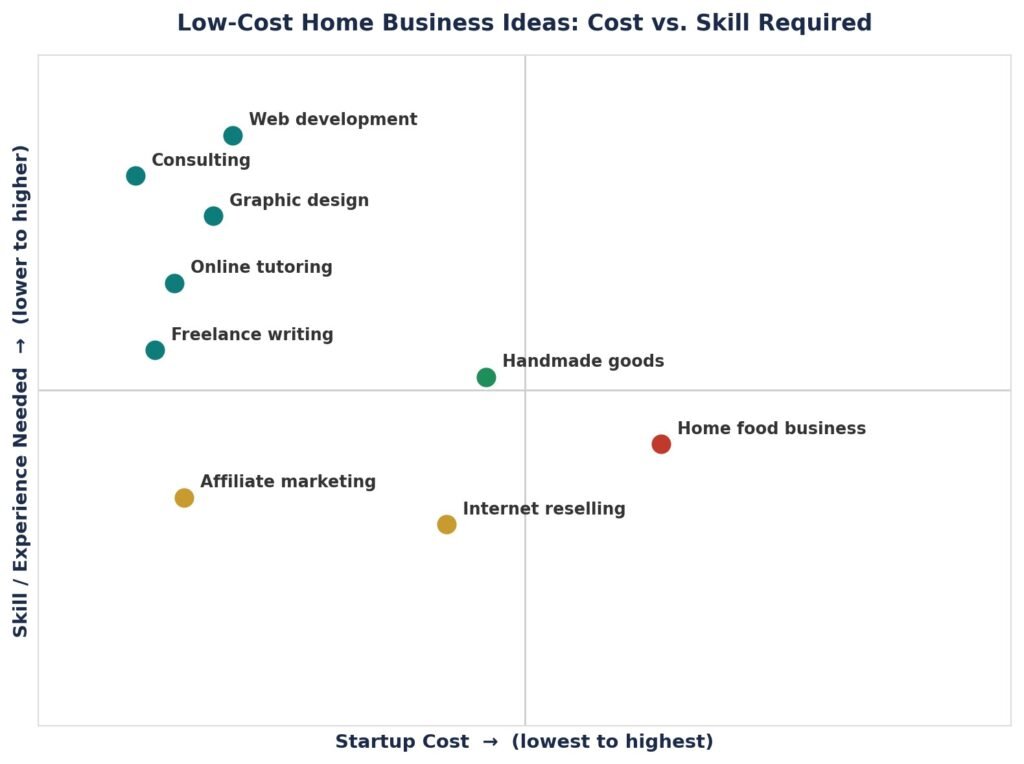
If you’re still deciding, the chart below maps a few common home business ideas by the amount of money they take to start and how much skill or experience they require. It helps to see it at a glance, instead of guessing the whole thing.
| Business Idea | What You Do | What You Need to Start |
| Content creation & freelance writing | Offer article and content creation services to clients. | Writing ability and a profile on freelance platforms or content marketplaces |
| Online tutoring | Teach a subject you know well to students online. | Subject expertise and an account on a tutoring platform such as Chegg Tutors or Tutor.com |
| Affiliate marketing | Recommend other companies’ products and earn commission on sales. | An audience or niche content where you can place affiliate links |
| Website development | Build, design, and maintain websites for clients as a freelancer. | Web development skills and a small portfolio of sample work |
| Handmade goods & artwork | Create and sell handcrafted items or art online. | Materials, craft skill, and an online storefront or marketplace listing |
| Home food business | Sell baked goods, snacks, or homemade meals from your kitchen | Cooking skills, local permits, and strict hygiene standards |
A Closer Look at the Home Food Business
If you start a little food business from your home, you can make a living doing something you already love. Find your niche. Avoid attempting to cater to everyone. Concentrate on one particular area. Find a niche like baked goods, snacks, or homemade merchandise for opportunities.
Before you sell anything, check your local regulations and get the required permits, because food businesses are more regulated than most home-based businesses. Success really hinges on a genuine commitment to cleanliness and consistent quality, not just noble intentions. Additionally, utilize social media to promote your food, create a unique profile or page to showcase your offerings, and engage with potential customers, such as everyday individuals.
It’s also worth thinking through delivery early, like before you get everything packed up. Investigate a few delivery methods to reach a broader audience—maybe you collaborate with local delivery services, or you handle deliveries personally for something more customized and a bit more human. Facebook Marketplace is also a beneficial channel, where home-based businesses can basically show their items and sell them to a wide local crowd.
Step 3: Use Free Tools to Run Your Business
Many things that used to cost money are now free. When starting out, see if a free option will work before paying.
| What You Need | Free or Low-Cost Option |
| A place to sell | Facebook Marketplace, eBay, or a free-tier online store |
| Finding clients | Freelance platforms and content marketplaces |
| Marketing | Social media profiles, word of mouth, and local community groups |
| Design work | Free design tools for logos, product photos, and social posts |
| Communication & invoicing | Free email, messaging, and basic invoicing tools |
| Learning new skills | Free online courses, tutorials, and library resources |
Step 4: Land Your First Customer
- Start with the people who kind of already know you: friends, family, former colleagues, and neighbors, because they are the easiest first customers and also the fastest source of honest feedback. It’s smoother because you don’t have to explain everything, and they’ll tell you if something feels off.
- Offer just one small, concrete thing. It’s much easier to say yes to a clearly defined first step that is affordable than to a big package. You know, start with something simple and limited.
- Deliver exceptionally well. Your first few customers are your portfolio, your testimonials, and your referral source all at once.
- Ask for referrals and reviews, too. A satisfied customer who recommends you is worth more than any advertising you could have bought, honestly.
- Reinvest your early profits, like actually putting those first earnings back into the business instead of calling them income right away, you know. It’s a small shift, but it helps things grow.
Build Your Network
Networking costs nothing but time, and it is one of the highest return activities for a new business owner, honestly. Go to local business events, conferences, and meetups, because those connections you build in your community often turn into customers, collaborators, and referrals later on.
- Join your local business owners in your area; this will help you build new relationships and expand your network.
- Hang around with other entrepreneurs, compare notes on what worked, and see where things didn’t. Search for opportunities to collaborate, even if they seem unexpected. Don’t just talk; search for opportunities together.
- Look into industry-specific associations near you, which give specialists a natural place to meet one another.
Common Mistakes to Avoid
- Building something before checking if anyone actually wants it is like running ahead of the queue.
- Spending on tools, branding, or inventory before you earn even a single rupee or dollar is like putting money in first and then expecting growth later. It’s like you put money in first, then expect growth later, which is a bit weird, but it does happen.
- This approach is like trying to serve everyone instead of picking a clear niche. It’s like trying to please everyone without taking a certain direction. The business lacks a clear focus.
- Underpricing to such an extent that the business can never become truly sustainable is another major issue.
- Skipping the necessary licenses or permits, particularly for a food business, is a significant oversight.
Quick Tip
Validate before you build. A few honest conversations with potential customers will tell you more than weeks of planning—and it costs nothing but the courage to ask.
Final Thoughts
Starting a business at home without money means putting in effort instead of spending money. Find a real problem that you are in a position to solve. Choose a model with almost no overhead. Use free tools. Obsess about landing and delighting your first customers. Add that to consistent networking in your community and reinvesting what you earn, and you can turn a no-money start into a business that can actually grow.
FAQ
Do I need to register a business to start from home?
Requirements seem to change depending on the location and the kind of business. A lot of small service companies can start kind of informally, though, but anything tied to food, or whatever, including regulated goods, usually needs permits or licenses. So, before you sell, check what your local rules say, because it can get a bit nuanced.
How long does it take to make money from a home business?
The situation varies significantly. Service businesses can start generating income the moment you land your first client, but affiliate marketing and content-based stuff usually take months just to grow enough audience to earn in a meaningful way. Occasionally it feels slower than expected because the reach needs time, and yeah, you build momentum first.
Can I start a home business while working a full-time job?
Yes, and many people do. Starting on the side allows you to develop the business without the pressure of needing immediate income. However, it is important to check your employment contract for any restrictions to avoid potential legal issues later.
What if I don't have any special skills?
Most marketable skills can pretty much be learned for free online. Just pick one that kind of lines up with what you actually like and also matches a real market need. Then start with the basics, and later offer your first kind of work at a lower rate while you build actual experience and collect testimonials. At the end, you’ll seem more solid, not just theory, you know.


Your article helped me a lot, is there any more related content? Thanks!
Thanks for sharing. I read many of your blog posts, cool, your blog is very good.