




The hardest part is getting to the mountain. When you arrive, the gold is real. That’s the best way I can describe what it feels like to trade options for a living. The chance is real, but the danger is real too. And the line between the two is thinner than most novices believe. In this week’s column, I want to openly discuss a crucial aspect that every trader must understand early on: the relationship between risk and reward in options trading and why this understanding is the only foundation worth building upon.
The Great Temptation: Easy Money and Big Returns
Let’s clarify one important point. You don’t need to trade with your hands. You don’t have to be chained to a desk for 8 hours a day. In theory, your capital can be working for you while you sleep.
Why Options Trading Feels Like a Shortcut
The problem is that people often confuse ease of entry with ease of success. Opening a trading account takes minutes. It takes seconds to open a trade. However, the true challenge lies in acquiring the knowledge and discipline necessary to trade profitably and consistently over months and years. Most people see the summit and forget to prepare for the climb.
High Risk, High Reward: What That Actually Means
Any seasoned trader knows the rule: the higher the risk, the higher the potential reward. But knowing it intellectually and living it in a losing trade are two entirely unique things.
The Cost of Losing Discipline
When I screw up—and I do screw up—I usually know the rules. Because I didn’t give a damn. I hold on to a position that is against me, hoping it will turn, and a manageable loss becomes a damaging one. That’s not bad luck. “That’s a lack of discipline.” The market cares less about ego than it does about stupidity.
What Separates Successful Traders from the Rest
A successful trader is like a person who has taken a vow of religion. Rules are not negotiable. Entry criteria, position size, stop levels, and exit targets are not suggestions. They provide a structure that removes emotional factors from the decision-making process. For traders, discipline is optional. Those who treat it as optional usually enjoy spectacular early successes and then have quietly devastating exits from the market.
The Real Choice: A Safe Job or a Serious Business?
A question worth sitting on? There is security in the regularity of a job. A trading business can provide you with freedom, but only if you treat it as a serious endeavor. This is not a hobby. Not an incidental experiment. A business with systems, records, reviews, and accountability.
Decide Before You Trade
If you’re still not sure whether trading is for you, that uncertainty will show up in your trades. Hesitant to enter, panicking on drawdown, and regretting it after exit—all these happen because you aren’t fully committed to the process. Make the call before the market makes it for you.
Building the Habits That Actually Work
Discipline in trading is not born overnight. It is built by small, daily actions that compound over time, just like the positions themselves.
Start a Trading Checklist Today
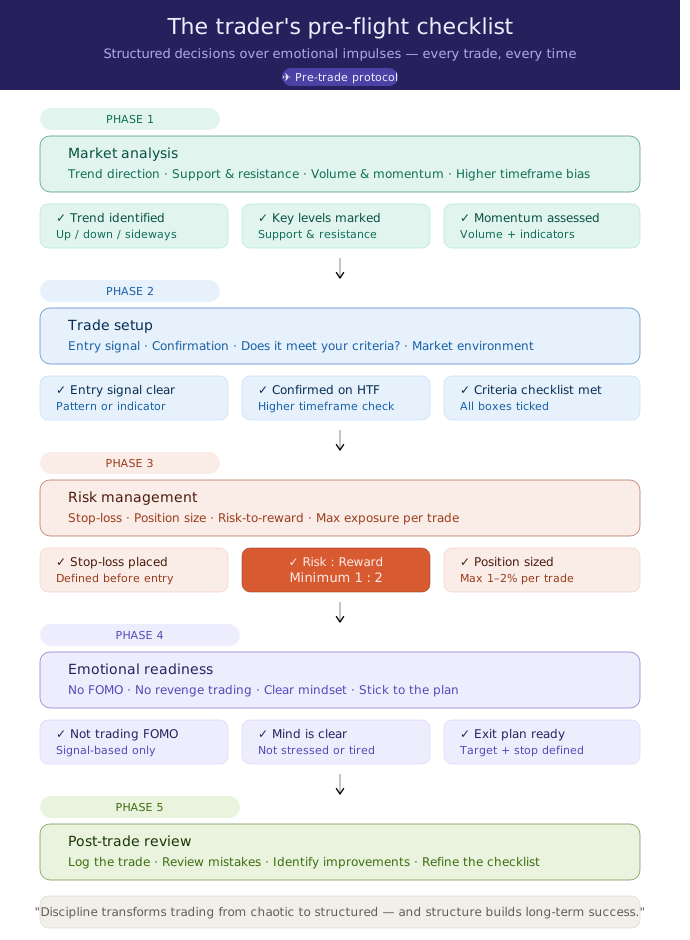
Before every trade I make, I run through a checklist. quality of installation. The risk-reward ratio, position sizing, and a clear exit strategy are essential. I check not because I might forget, but because checking keeps me grounded in process, not in impulse. If you don’t have a checklist, make one today. It doesn’t have to be overly complicated. It has to be followed.
Breathing, Routine, and Mental Fitness
This advice may sound strange coming from a trading column, but I mean it: if you want to trade well, manage your mind first. Pranayama, meditation, a morning routine, and a task list that you can complete and cross off are all beneficial practices. These are not soft suggestions. A calm, focused mind. It performs better under pressure. The market will shove you. The only question is, are you ready for it?
Final Thoughts
Options trading is a game of risk and reward; you can’t have one without the other. But that’s what I’ve learned: the traders who stick around aren’t the ones who figured out how to avoid risk. They learned to measure it, to respect it, to build systems strong enough to survive it. Where do you go next? One checklist item at a time, step-by-step. “The market rewards discipline. It has very little tolerance for the foolhardy. Decide who you want to be and then be it.
Find out here: How to Predict Market Direction for Option Selling: It Is Simpler Than You Think
Disclaimer: This column reflects the author’s personal trading experience and analysis. It is not financial advice. Please consult a registered advisor before making any investment decisions.

Satyajit Baidya
He is an option writer who came to the markets through curiosity and stayed through conviction. He studies price action through the lens of Elliott Wave theory and draws his trading philosophy from Jesse Livermore—the belief that discipline, timing, and patience matter more than predictions do. A student of history by training, he sees the market as just another chapter in a very long story: the details change, the patterns don’t.