





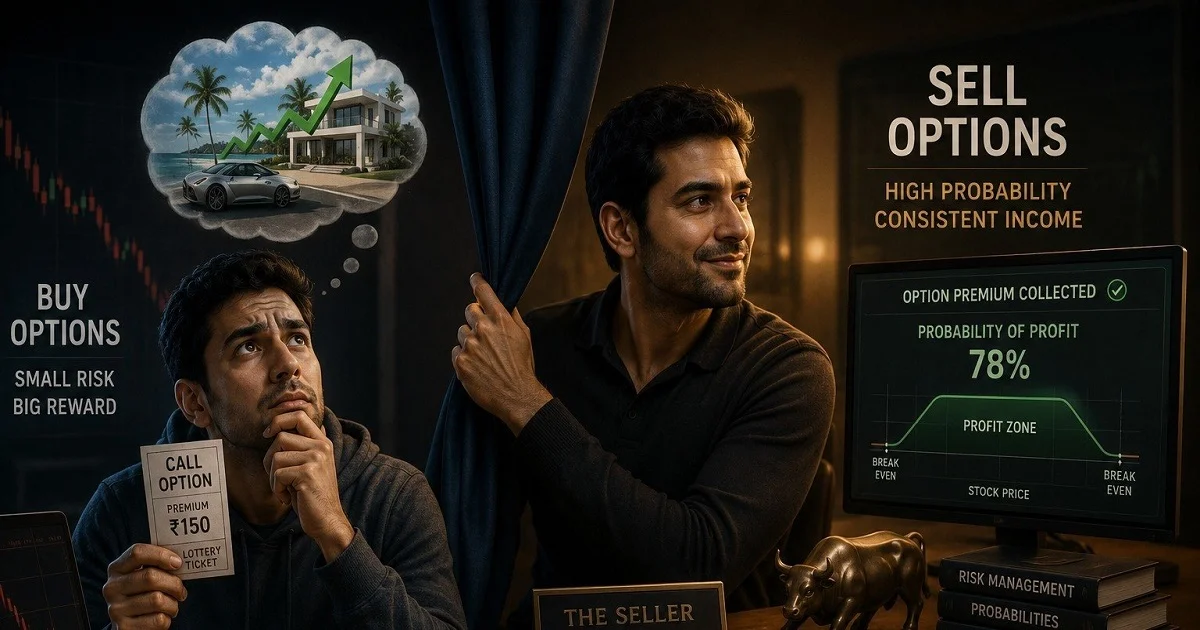
Most people that come into the stock market want to buy options. They want to buy a lottery ticket, paying a small amount for the chance to win a large sum. I hear you. I used to think that way, too. But having watched that approach drain accounts for years, I’ve changed sides. I was the seller. And that one move changed everything. This column is my attempt to share what I’ve learned, not as financial advice, but as a fellow trader pulling back the curtain on a strategy most retail investors don’t even think about.
What Is Option Selling and Why It Matters?
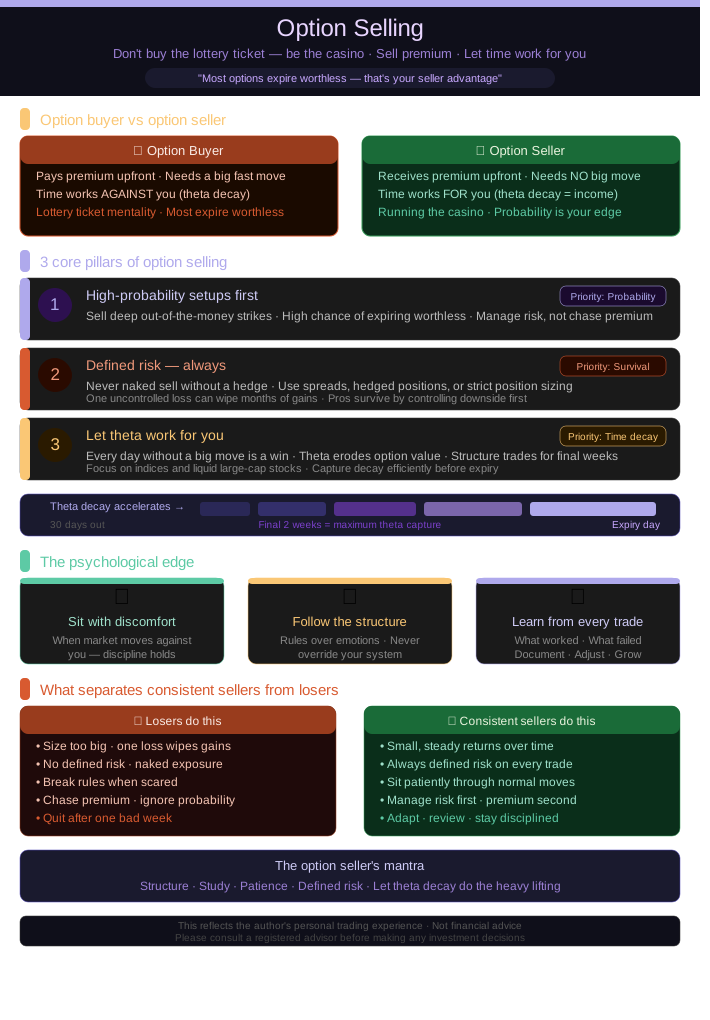
When you buy an option, you pay a premium and hope the market moves your way quickly. However, when you sell an option, you receive the premium upfront and allow time to work in your favor. As an option writer, I don’t have to guess where the market is going. I want to know about probability.
The Core Idea: Selling Volatility, Not Direction
Most of the options are wasted. Studies indicate that the vast majority of options contracts expire worthless. That’s your seller advantage. You are not betting on a coin flip; you are running the casino. And as Jesse Livermore said in ‘How to Trade in Stocks,’ this game is not for those who dream of overnight riches. It requires discipline, patience, and a mental constitution as solid as iron.
My Strategy at a Glance: What I Actually Do
I trade primarily in options on indices and liquid large-cap stocks. My general philosophy is this:
High Probability Setups First
I look for deep out-of-the-money strikes, which have a high probability of expiry. I’m not chasing premium; I’m managing risk. A small, steady return is always better than a spectacular loss.
Defined Risk, Always
Naked selling can blow up an account. My policy is always to have defined risk on trades, whether that means spreads, hedged positions, or position sizing, so that a single loss is manageable. This is not cowardice. That’s how pros stick around long enough to win.
Letting Theta Work for You
Theta decay, the erosion of an option’s time value, is an option seller’s best friend. “Every day that there isn’t a big move is a positive for me.” I structure trades to efficiently capture this decay, especially in the final weeks before expiry.
The Psychological Edge: Why Most People Fail at Trading
Here’s something no trading course is going to tell you upfront: The hardest part of option selling isn’t finding the right trade. It’s just sitting there when the market goes against you for a bit.
Nicolas Darvas turned a few thousand dollars into millions, not by luck but by incredible discipline when other people panicked. That mental quality is what distinguishes a consistent options seller from one who loses all his gains in a single disastrous week.
I’ve taken out positions. I have violated my own rules. And I have suffered significant consequences as a result. Each week, this column will deliver honest reporting, what worked, what didn’t, and what I learned.
What to Expect from This Column
Each week, I’ll walk you through the following:
- My current market outlook and how it shapes my trades
- The specific setups I’m watching and why
- Real trade breakdowns: entries, exits, adjustments
- The thinking behind the trade, not just the numbers
This is not a tips column. I won’t tell you what to buy or sell. I’ll show you how I think, I’ll show you how I plan, and I’ll show you how I adapt. If you’re tired of the noise and want to learn how to sell options from the inside, this column is for you.
Final Thoughts
The stock market has always rewarded those who know it, not those who just participate in it. There is an alternative source of income, but it cannot be achieved through shortcuts. It comes from structure, study, and hard-won experience. Now I’m not here to promise you a gold mine. I want to provide you with the map I use to navigate one. Welcome to the column.
Find out here: Risk and Reward in Options Trading: The Truth Nobody Tells You at the Start
Disclaimer: This column reflects the author’s personal trading experience and analysis. It is not financial advice. Please consult a registered advisor before making any investment decisions.

Satyajit Baidya
He is an option writer who came to the markets through curiosity and stayed through conviction. He studies price action through the lens of Elliott Wave theory and draws his trading philosophy from Jesse Livermore—the belief that discipline, timing, and patience matter more than predictions do. A student of history by training, he sees the market as just another chapter in a very long story: the details change, the patterns don’t.


This article gave me a refreshing way to understand the issue today and I look forward to reading more from you